We compute it and we cite it. We do not test gear. How we know this.
Short answer
A standard barbell weighs 45 lb (about 20.4 kg). A women’s bar is 35 lb. Competition bars are 20 kg and 15 kg. Technique bars run 15 to 25 lb.
What the bars actually look like
Five bars, drawn to the dimensions their own spec sheets publish. The shape is the giveaway: if the bar in your hands is bent, hexagonal, or padded, it is not 45 lb and you cannot assume a number for it.
Five bars at one fixed camera distance, so the lengths compare directly.An original 3D animation comparing five barbell types. The camera never moves and never zooms between segments, so each bar appears at its true length relative to the others rather than being scaled to fill the frame. Each bar rotates on its own axis to show its shaft diameter and profile.Original animation by BarWeight — an illustration of this class of equipment, not footage of a specific product, and not a demonstration of how to perform a lift.
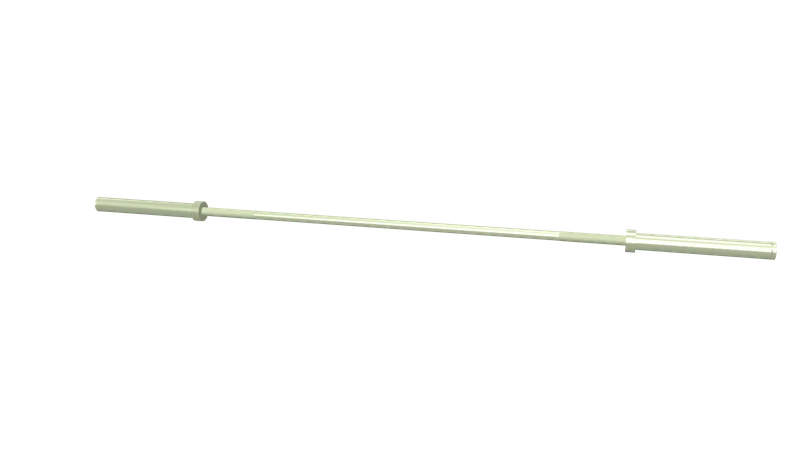
A men's Olympic bar. 20 kg by IWF rule.Original 3D render by BarWeight — an illustration of this class of equipment, not a photograph of a specific product.
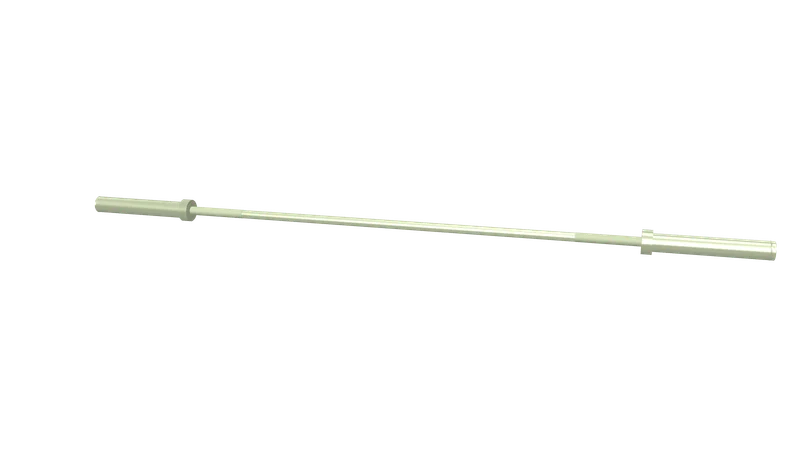
A women's bar. 15 kg, and a 25 mm shaft instead of 29 mm.Original 3D render by BarWeight — an illustration of this class of equipment, not a photograph of a specific product.
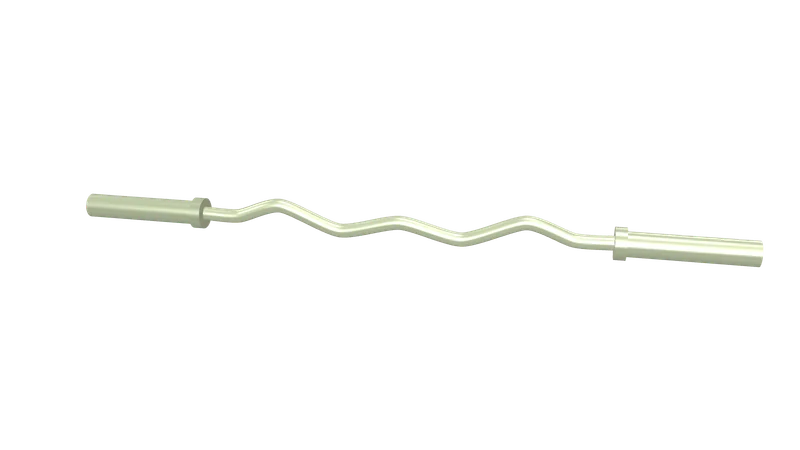
An EZ curl bar. Weight is not standardised — this one is 30 lb, others run 10 to 30 lb.Original 3D render by BarWeight — an illustration of this class of equipment, not a photograph of a specific product.
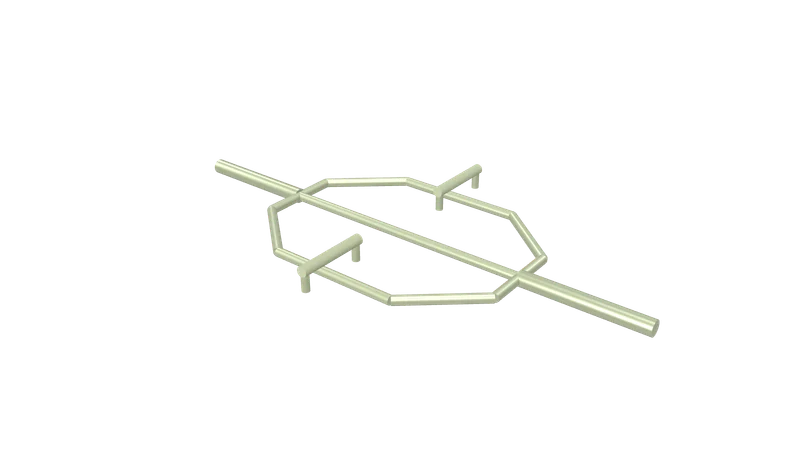
A trap bar. Varies more than any other bar: roughly 35 to 75 lb depending on the maker.Original 3D render by BarWeight — an illustration of this class of equipment, not a photograph of a specific product.
A safety squat bar. The padded yoke and forward handles add weight the bar's own maker may not publish — weigh yours.Original 3D render by BarWeight — an illustration of this class of equipment, not a photograph of a specific product.
Every published spec, side by side
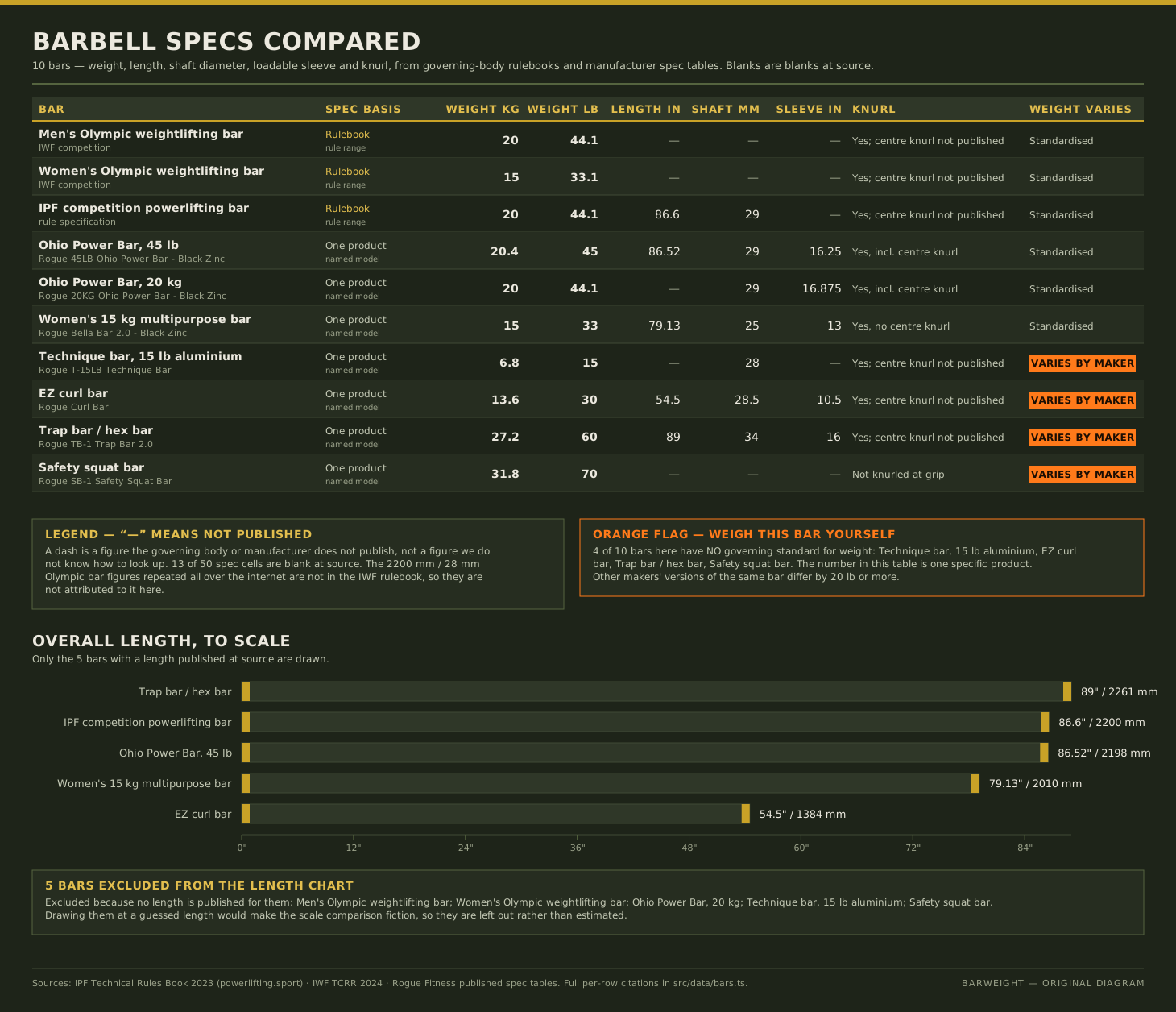
Weight, length, shaft diameter and knurl for every bar in our dataset. Where a governing body or a manufacturer does not publish a figure, the chart shows a dash rather than a number somebody made up.
Pounds and kilos side by side. Conversions use the exact figure — one pound is 0.45359237 kg — so the second column is the true equivalent, not a rounded one.
Barbell weights in pounds and kilograms
Bar
Pounds
Kilos
Men's Olympic bar (45 lb)The default bar on almost every American rack. Nominal 45 lb, about 7 feet long.
45 lb
20.41 kg
Men's Olympic bar (20 kg)IWF competition spec. 20 kg is 44.09 lb, so it is NOT the same as a 45 lb bar.
44.09 lb
20 kg
Women's Olympic bar (35 lb)Thinner 25 mm grip, shorter shaft. Nominal 35 lb.
35 lb
15.88 kg
Women's Olympic bar (15 kg)IWF competition spec. 15 kg is 33.07 lb.
33.07 lb
15 kg
Technique bar (15 lb)Light training bar for drilling positions. Often aluminum.
15 lb
6.8 kg
Technique bar (25 lb)Middle step between a technique bar and a full Olympic bar.
25 lb
11.34 kg
Technique bar (10 kg)Metric technique bar. 10 kg is 22.05 lb.
22.05 lb
10 kg
Training bar (5 kg)Very light bar, usually for teaching kids and beginners.
11.02 lb
5 kg
The 20 kg and 15 kg figures are the competition specs published in the IWF Technical and Competition Rules & Regulations. The pound figures are nominal American gym sizes — how bars are sold and stamped. These are not weights BarWeight put on a scale.
Gear that fits the math
Bars we have read the spec sheet on
Every bar below had its listing opened and its numbers copied down. Where a listing does not publish the bar weight or the knurl, we say so instead of filling the gap in.
BarWeight is a participant in the Amazon Services LLC Associates Program. We earn a commission from qualifying purchases made through links on this page, at no extra cost to you.Full disclosure.
Specs read from the listing on 2026-07-24. Listings change — confirm the current spec and option before you order.
The standard 45 lb bar
Walk into any commercial gym in the United States and the bar on the rack is a nominal 45 lb men’s Olympic bar. It runs about seven feet, has a 28 to 29 mm shaft, and rotating sleeves that take two-inch plates. When someone says “just the bar,” this is what they mean.
Forty-five pounds is a strange number until you see where it comes from: it is the pound-denominated cousin of the 20 kg competition bar. American manufacturers rounded up to a round pound figure and it stuck. That single rounding decision is the source of most barbell weight confusion.
45 lb vs 20 kg: they are not the same bar
A 20 kg bar weighs 44.09 lb. That is 0.91 lb lighter than a 45 lb bar. On its own it is trivial. It stops being trivial when you are trying to hit an exact total, when you are cutting to a weight class, or when you train on a kilo bar and compete on a pound bar.
The same trap sits one level down in the plates. A 20 kg plate is 44.09 lb, not 45. Load a “20 kg bar with a 20 kg plate a side” and you have 60 kg, which is 132.28 lb — not the 135 lb you would get from the pound equivalent. If you mix kilo plates onto a pound bar, run the numbers through the plate math calculator rather than eyeballing it.
Women’s bars
A women’s Olympic bar is 35 lb in pound gyms and 15 kg (33.07 lb) in competition. Weight is only half of what makes it a different bar. The shaft is 25 mm instead of 28 to 29 mm, which matters enormously for grip, and the bar is shorter overall with a shorter loadable sleeve.
Nothing about it is women-only. Plenty of lifters with smaller hands prefer the 25 mm shaft regardless, and it is the correct bar for anyone drilling snatch technique with a hook grip.
Technique and training bars
Technique bars exist so a lifter can rehearse a movement pattern without carrying meaningful load. They usually run 15 lb, 25 lb, 10 kg, or 5 kg, and are frequently aluminum. Many take full-diameter bumper plates so the bar sits at the correct height off the floor even though it is light — that geometry is the entire point for Olympic lifts.
Specialty bars: weigh them
Trap bars, safety squat bars, cambered bars, Swiss bars, and EZ curl bars have no standard weight. They range widely by manufacturer and model, and there is no governing spec to point at. Anyone quoting you a single confident number for “the trap bar” is guessing.
BarWeight does not list weights for these because we have not weighed them and no spec exists to cite. Check the stamp on the bar or the manufacturer’s page for your exact model, or put it on a scale. Then plug that number into any calculator here as a custom bar weight.
Counting the bar in your total
Yes, you count it. Universally. A lifter who says they benched 185 means the bar read 185 with the bar included: a 45 lb bar and 70 lb of plate per side.
The mistake shows up most in beginner logs, where someone records the plates only and under-reports every lift by the weight of the bar. It also shows up when people compare a Smith machine to a free bar, since a Smith machine’s carriage is counterbalanced by an unknown amount and its bar has no standard weight either.
Every piece of equipment we have spec’d, split by what it is. Each page compares the same published numbers side by side — no prices, no ratings, nothing we pretend to have tested.
A standard men’s Olympic barbell is a nominal 45 lb, which is about 20.4 kg. This is the bar on almost every rack in an American gym.
▶Is a 45 lb bar the same as a 20 kg bar?
No. A 20 kg bar weighs 44.09 lb, so it is about a pound lighter than a 45 lb bar. They get used interchangeably in conversation but they are different bars, and the gap grows relative to your total if you are chasing a specific number.
▶How much does a women’s barbell weigh?
A women’s Olympic bar is a nominal 35 lb in pound-denominated gyms and 15 kg (33.07 lb) in competition. It also has a thinner 25 mm shaft and a shorter overall length than a men’s bar.
▶How much does a technique bar weigh?
Technique and training bars commonly run 15 lb, 25 lb, 10 kg, or 5 kg. They are used to drill positions without loading the lifter, and are often aluminum rather than steel.
▶Should I count the bar when I record my lift?
Yes. Standard practice everywhere is that the number you say includes the bar. Two 45 lb plates per side on a 45 lb bar is 225 lb, not 180 lb.
▶Do all 45 lb barbells actually weigh exactly 45 lb?
Not necessarily. 45 lb is a nominal size, which is how the bar is sold and stamped. Manufacturing tolerance varies by maker and price point. IWF competition bars are held to a tight tolerance by rule; a general-purpose gym bar is not. If the exact figure matters, weigh it.