Skip to content
BarWeight
Tools

Plate loading visualizer

Short answer

Pick a bar, enter a target, and this plate loading visualizer draws the bar exactly as it should look. Tell it which plates you own and it will only use those.

Units
lb
225 LB
Per side: 2 × 45 lb. Bar: 45 lb.

Gear that fits the math

The plates drawn above, in the real world

The visualizer will draw any set you like. These are the ones we have actually spec'd, so you can check thickness against your sleeve before you buy.

BarWeight is a participant in the Amazon Services LLC Associates Program. We earn a commission from qualifying purchases made through links on this page, at no extra cost to you. Full disclosure.

PlatesCAP Barbell2 in Olympic
Bore
2 in Olympic
Set Weight
75 to 285 lb depending on option

Best for: The cheapest route to a full plate set when you are not dropping the bar.

Skip if: You deadlift to the floor without a platform.

Check these yourself before ordering

  • — Which set size you selected
  • — The exact plate breakdown — a stated total does not tell you the increments
  • — Sleeve length against total plate thickness
View on Amazon

Specs read from the listing on 2026-07-24. Listings change — confirm the current spec and option before you order.
Add bumpers to a bar you own

PlatesAMGYM2 in Olympic
Bore
2 in Olympic
Type
Bumper plates

Best for: Adding bumpers to a bar you already own.

Skip if: You want low-bounce competition-style bumpers — this listing states high bounce.

Check these yourself before ordering

  • — Which weights the option contains and whether it is a pair or a set
  • — Bounce behaviour, since the listing describes these as high bounce
  • — Plate thickness against your sleeve
View on Amazon

Specs read from the listing on 2026-07-24. Listings change — confirm the current spec and option before you order.
PlatesCAP2 in Olympic
Bore
2 in Olympic
Set Weight
100 to 370 lb depending on option
Type
Bumper plates
Optional
Storage rack

Best for: Deadlifting and dropping the bar without wrecking the floor.

Skip if: Space is tight. Bumpers are thicker than iron, so fewer fit on the sleeve.

Check these yourself before ordering

  • — Which set size you are ordering — the listing runs 100 to 370 lb
  • — Whether the storage rack is included in your option
  • — Total loaded sleeve length before you buy the heavy set
View on Amazon

Specs read from the listing on 2026-07-24. Listings change — confirm the current spec and option before you order.
The classic loads, drawn

Four bars every lifter recognises. These are drawn on the server, so they render with JavaScript switched off.

135 LB
Per side: 1 × 45 lb. Bar: 45 lb.
225 LB
Per side: 2 × 45 lb. Bar: 45 lb.
315 LB
Per side: 3 × 45 lb. Bar: 45 lb.
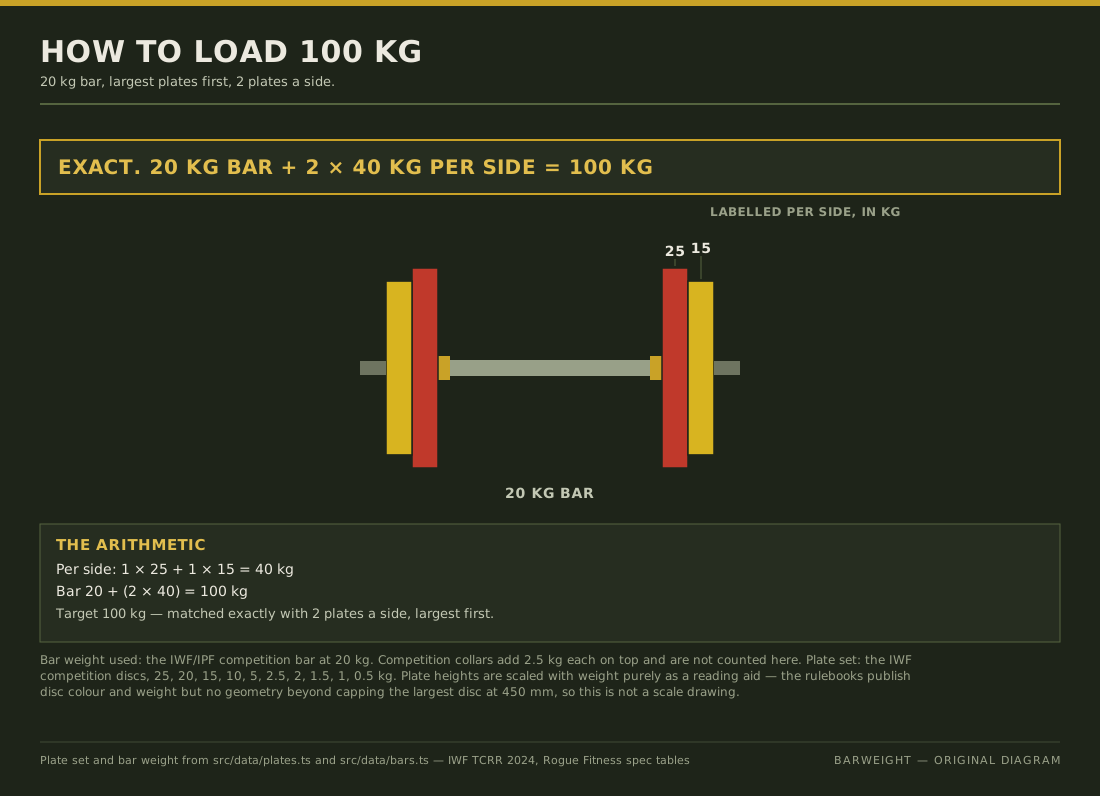
100 KG
Per side: 1 × 25 kg + 1 × 15 kg. Bar: 20 kg.

Competition plate colours

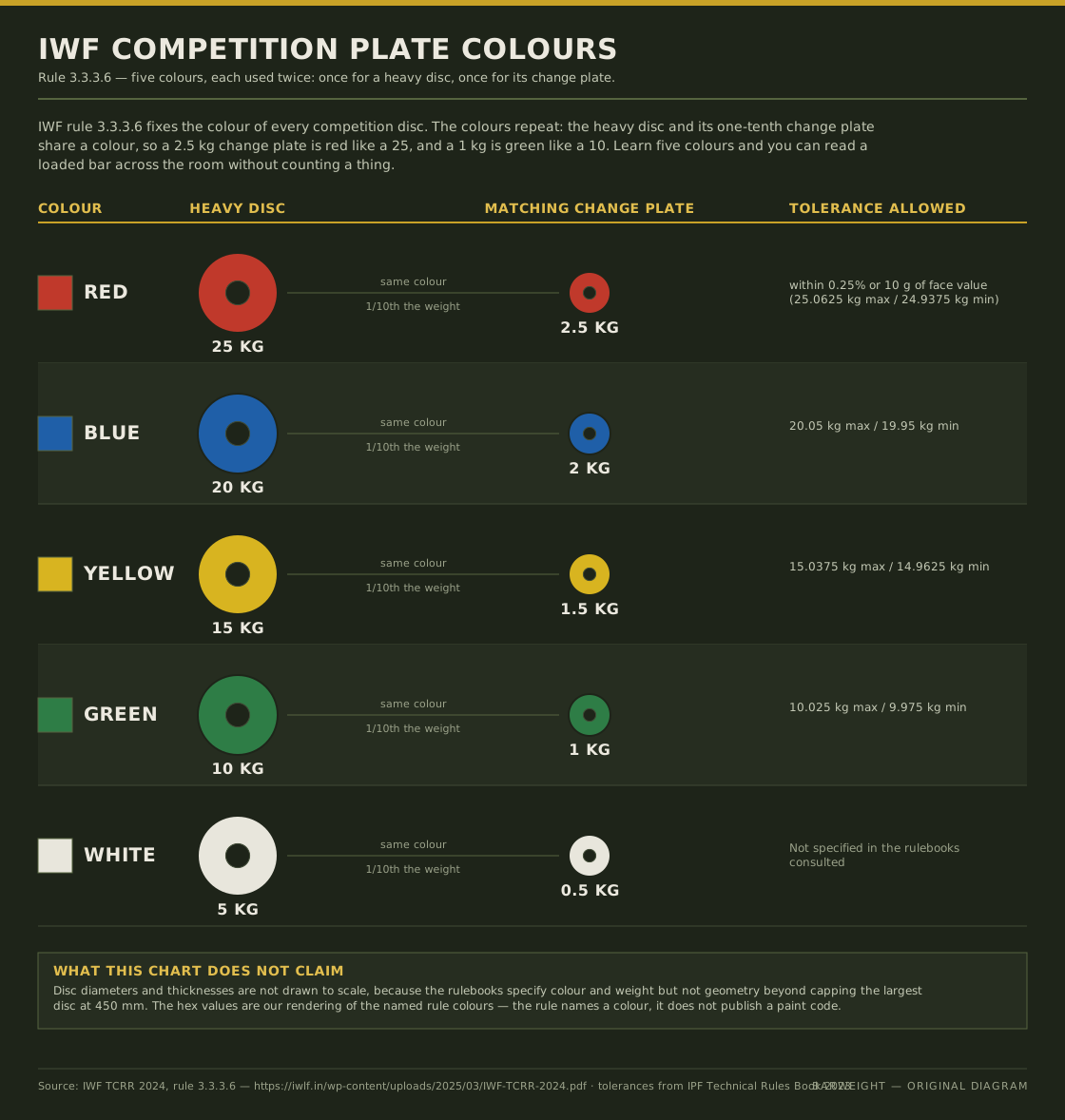
Kilo discs are colour coded by rule so the bar can be read across a platform. The visualizer uses these colours.

  • 25 kgRed
  • 20 kgBlue
  • 15 kgYellow
  • 10 kgGreen
  • 5 kgWhite

Colours per the IWF Technical and Competition Rules & Regulations disc specification. Pound plates have no equivalent standard.

Chart of the ten IWF competition plate colours under rule 3.3.3.6, each row pairing a heavy disc with the change plate that shares its colour: red 25 kg with 2.5 kg, blue 20 kg with 2 kg, yellow 15 kg with 1.5 kg, green 10 kg with 1 kg, and white 5 kg with 0.5 kg, alongside the weight tolerance each disc is allowed.
The colours repeat: every heavy disc shares its colour with the change plate a tenth of its weight. Learn five colours and you can read a loaded bar from across the room.Open this chart full size — or drag it sideways to read it here.

The same three loads, animated

The visualizer above shows you a finished bar. This shows it being built — a pair of 45s at a time, from an empty 45 lb bar up to 315.

Our own render, modelled to the IPF bar spec and the published plate spec table.An original 3D animation showing how the three most common barbell loads are built. A 45 lb bar starts empty; a 45 lb plate slides onto each sleeve to make 135 lb, a second pair makes 225 lb, and a third pair makes 315 lb. The running total and the plates-per-side count are shown throughout. This is an illustration of a class of equipment, not footage of a specific product.Original animation by BarWeight — an illustration of this class of equipment, not footage of a specific product, and not a demonstration of how to perform a lift.

Print one and stick it on the wall

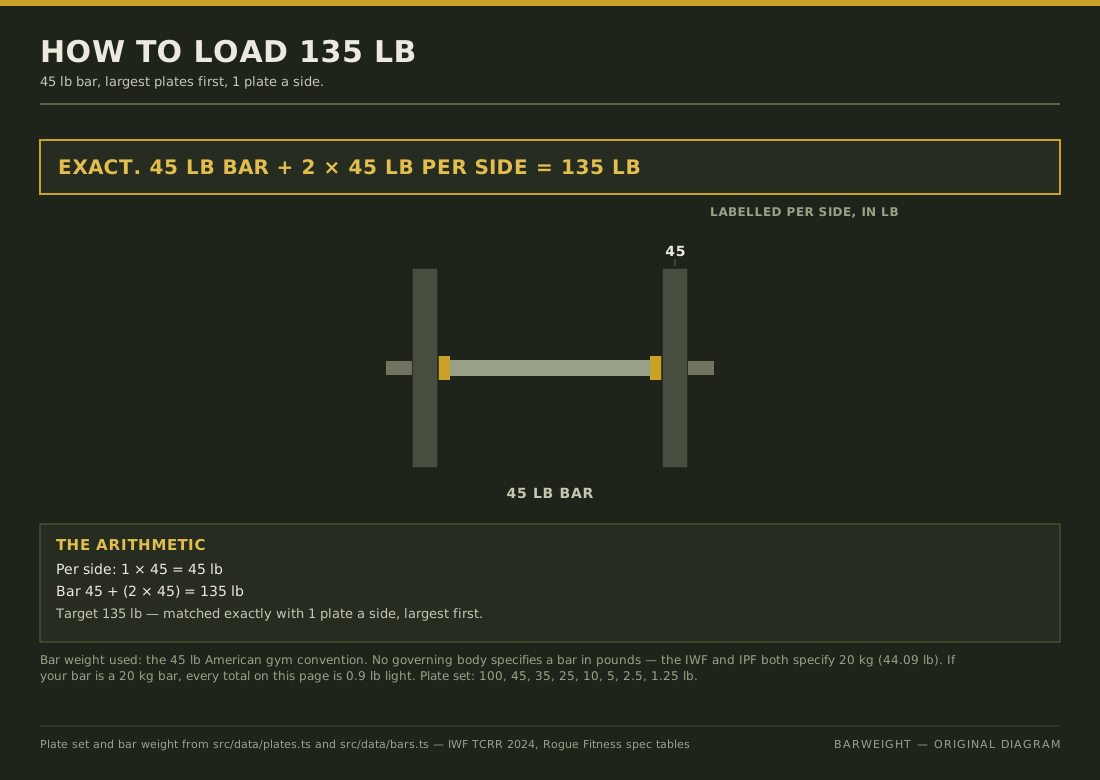
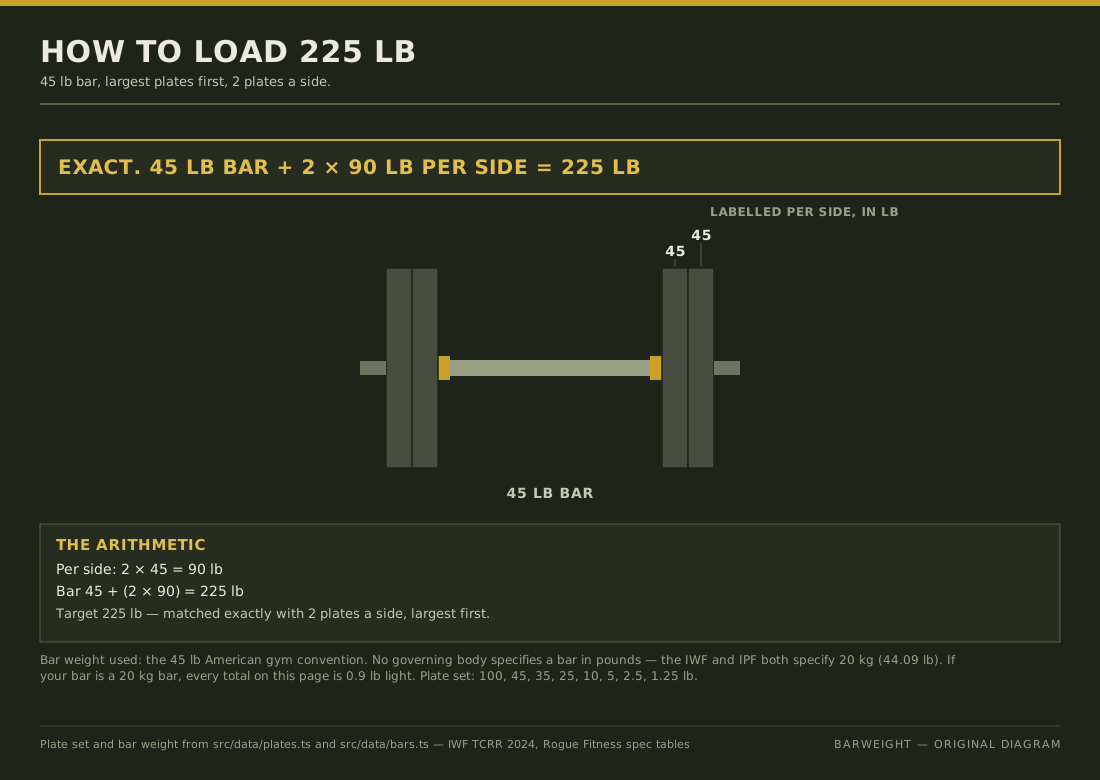
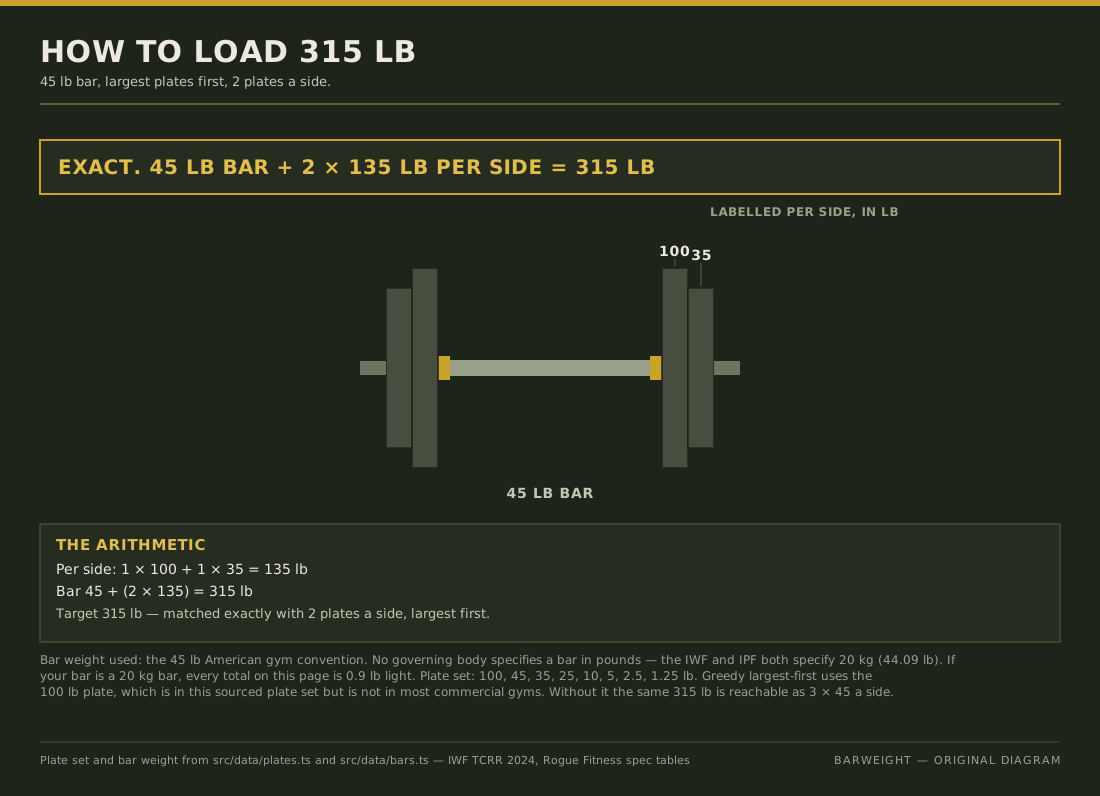
The four loads people actually call out, drawn to scale with the arithmetic shown. Save one to your phone or put it on the wall by the rack.

Barbell loading diagram for 135 lb: a 45 lb bar loaded with 1 × 45 on each side, drawn as labelled plates sliding onto both sleeves, with the arithmetic written out as bar 45 plus two times 45 equals 135 lb, matching the target exactly.
Open this chart full size — or drag it sideways to read it here.
Barbell loading diagram for 225 lb: a 45 lb bar loaded with 2 × 45 on each side, drawn as labelled plates sliding onto both sleeves, with the arithmetic written out as bar 45 plus two times 90 equals 225 lb, matching the target exactly.
Open this chart full size — or drag it sideways to read it here.
Barbell loading diagram for 315 lb: a 45 lb bar loaded with 1 × 100  +  1 × 35 on each side, drawn as labelled plates sliding onto both sleeves, with the arithmetic written out as bar 45 plus two times 135 equals 315 lb, matching the target exactly.
Open this chart full size — or drag it sideways to read it here.
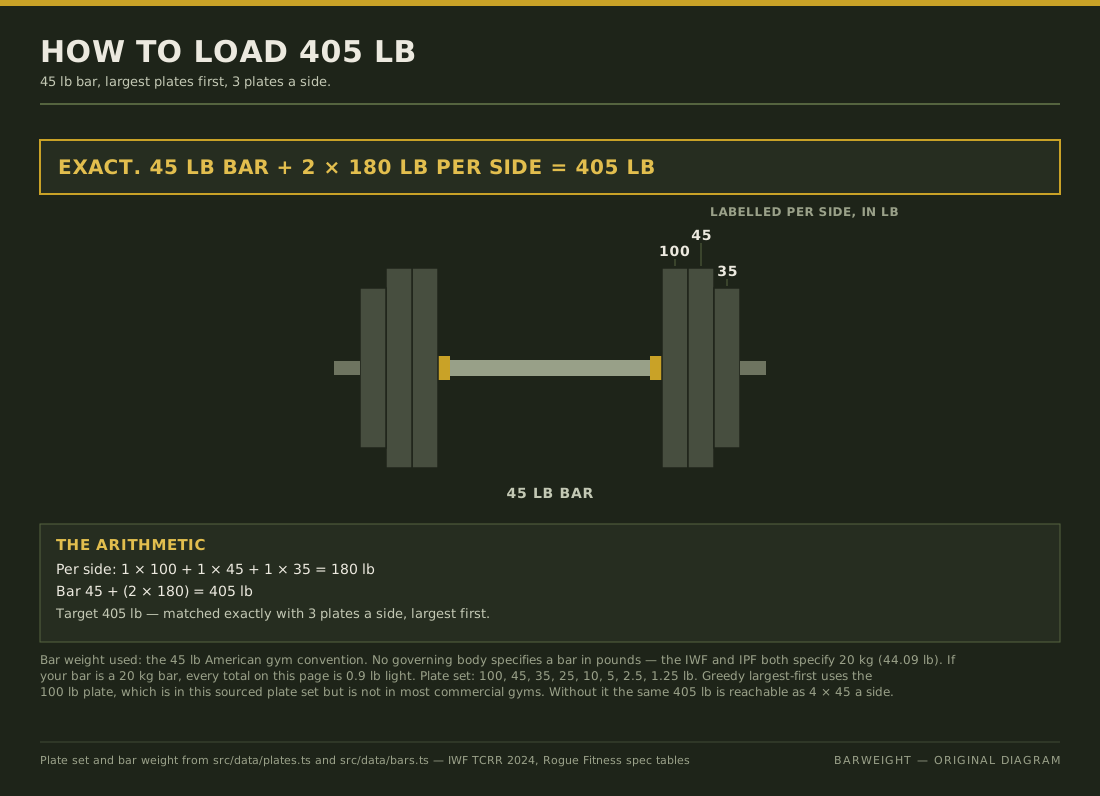
Barbell loading diagram for 405 lb: a 45 lb bar loaded with 1 × 100  +  1 × 45  +  1 × 35 on each side, drawn as labelled plates sliding onto both sleeves, with the arithmetic written out as bar 45 plus two times 180 equals 405 lb, matching the target exactly.
Open this chart full size — or drag it sideways to read it here.

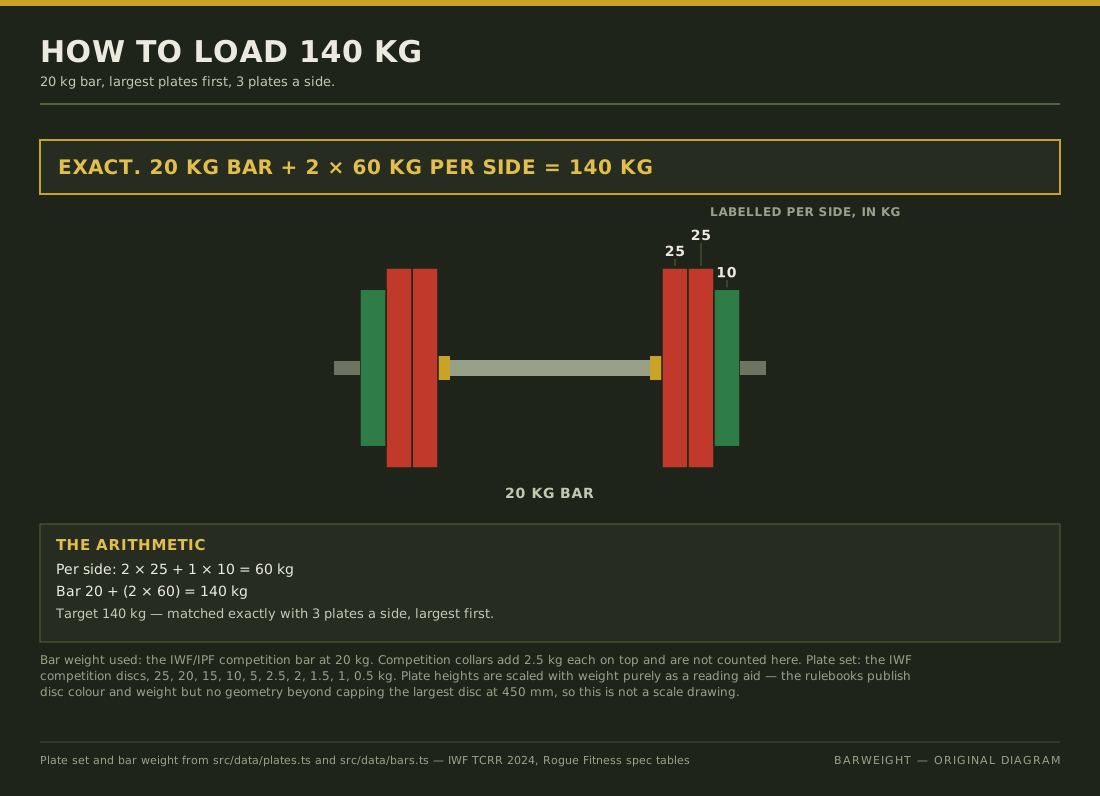
Both kilo versions are drawn too: 100 kg and 140 kg.

How to load a bar properly

Heaviest plate first, flat against the collar, then work outward in descending size. Load both sides evenly and load them alternately — a bar with three 45s on one side and nothing on the other will tip a rack or roll off a platform.

Use collars once you are past warm-up weights. On a bench or an overhead press the plates will walk outward under an uneven rep, and a plate sliding off one end is how people get hurt.

Loading heaviest-first also has a practical upside: it is the arrangement with the fewest plates on the sleeve, which means less to strip between sets. The warm-up generator uses the same rule for every rung of the ramp.

Equipment by category

Looking for the gear itself?

Every piece of equipment we have spec’d, split by what it is. Each page compares the same published numbers side by side — no prices, no ratings, nothing we pretend to have tested.

Questions people actually ask

What order should plates go on the bar?

Heaviest first, seated against the collar, then descending outward. That keeps the mass close to the sleeve shoulder, makes the load obvious at a glance, and is how every competition bar is loaded.

Why are competition plates colour coded?

So a judge, a loader, and a lifter can all read the bar from across a platform without counting. The IWF technical rules assign each disc size a colour: 25 kg red, 20 kg blue, 15 kg yellow, 10 kg green, 5 kg white. The visualizer uses those colours for kilo plates.

Can I use it with a limited home plate set?

Yes, that is the main reason it exists. Tick "I have a limited plate set" and set how many pairs of each size you own. The solver will only use plates you actually have and will tell you the closest total it can build.

Do pound plates have standard colours?

No. Pound plate colours are a manufacturer convention, not a standard, and they vary between brands. The colours shown for pound plates here are a common convention used for legibility only.